Flooring Contractor Website Design on a Budget: Best Options for Small Home Service Brands
A flooring company does not need a fancy website to win good jobs. It needs a trustworthy one. That distinction saves a lot of small contractors from wasting money.
I have seen home service brands spend heavily on polished visuals while ignoring the basics that actually move leads: fast mobile browsing, clear service pages, easy contact options, and a site that looks current enough to earn trust. I have also seen the opposite, a simple site with sharp messaging and a few strong project photos outperform a bigger competitor because it answered the customer’s questions faster.
If you are comparing options for flooring contractor website design, the real issue is not whether you can get online cheaply. You can. The real issue is whether the version you choose will help you book estimates without creating a second job for yourself.
That matters even more for small operators. A flooring business owner is already juggling jobsite visits, supplier calls, crews, scheduling, and collections. Website decisions have to fit that reality. The smartest budget move is rarely the cheapest line item. It is the option that gets you a credible site, keeps it current, and does not drag you into constant technical maintenance.
What a budget website actually needs to do
For a local flooring company, a website has one primary job: turn interest into action. Someone lands on your homepage or a service page, decides you look legitimate, sees what you do, and contacts you. That action might be a call, a form submission, or a request for an estimate. If the site supports that path cleanly, it is doing its job.
A lot of business owners get distracted by extras before they have the fundamentals. They ask about custom animations, special transitions, or unusual layout ideas when their phone number is buried, their service area is unclear, and their site looks clumsy on a phone. That is backward. Google’s guidance for business sites is straightforward: keep content current, make the site mobile-friendly, and show contact information prominently. That alone tells you what a budget-conscious contractor should prioritize.
For flooring contractor website design, the must-haves are usually simple. Your site should explain what kinds of flooring work you do, make it obvious where you work, display real project photos if you have them, and make it painless to reach you. Everything else sits below that.
The same logic applies across related trades. Whether someone is selling epoxy flooring website design, home remodeling website design, concrete coating website design, dock builder website design, pool screen enclosure website design, or mold remediation website design, the website still has to support customer decisions and lead capture. Different services call for different wording and imagery, but the structure of trust is remarkably similar.
How much does a contractor website cost, really?
One of the most common questions owners ask is, how much does a contractor website cost? The honest answer is that there is no single correct number. Costs vary widely based on design complexity, features, who builds it, and how ongoing maintenance is handled.
That variability is not a dodge. It is the reality of the market.
A very lean DIY site can be the lowest-cost path upfront. A freelancer usually adds design help and setup, which moves the cost higher. An agency can go much further with strategy, custom functionality, and broader support, but that typically brings a larger project fee. A managed website for small business often spreads cost into a monthly subscription and bundles things owners usually forget to price separately, like hosting, updates, security, backups, and support.
So when someone asks how much does a contractor website cost, I usually push them to ask a better question first: what am I paying for, and what work will still fall on me after launch?
That is where cheap sites often stop being cheap. If you save money upfront but then spend evenings fixing pages, chasing plugin updates, or trying to edit your own content because no one else will touch it, the total cost goes up in time, frustration, and lost leads.
The four budget paths most contractors consider
Most small home service brands end up choosing between four broad options. Each can work. Each also has drawbacks that matter more than the marketing pitch suggests.
| Option | Best for | Main advantage | Main trade-off | |---|---|---|---| | DIY builder | Owners with time and basic comfort editing a site | Lowest upfront cost | You handle setup, updates, and content quality | | Freelancer | Small businesses needing design help without full agency pricing | More polish and customization | Support may vary after launch | | Agency | Businesses needing strategy, development, or more complex functionality | Broader expertise and custom work | Higher project fees | | Managed website service | Owners who want convenience and ongoing support | Bundled hosting, updates, security, backups, and support | Ongoing monthly commitment |
That table is the clean summary, but the decision usually comes down to personality and operating style.
If you like control, have some time, and only need a basic online presence, a DIY route can make sense. Builders are widely considered the most budget-friendly starting point. For a flooring company with a narrow service area and a simple offer, that may be enough.
If you know your website needs to look more professional than what you can confidently build yourself, a freelancer can be a strong middle ground. This is often the point where owners look for a web designer for contractors because they want the site to look credible without paying for a full agency engagement.
If you need deeper strategy or complex functionality, an agency starts to make more sense. Agencies are generally better suited when the project goes beyond design and setup into broader planning or custom development.
And if your biggest problem is not the initial build but the headache of keeping the site alive and current, a managed website for small business can be the more practical choice.
When DIY is the right answer
There is no shame in starting small. In fact, a modest DIY site is often the right move for a flooring contractor opening a new business, testing a market, or replacing an outdated placeholder page.
The best website builder for contractors, in a practical sense, is the one that helps you launch something clear, mobile-friendly, and easy to update without making a mess. That may sound obvious, but many owners choose based on features they will never use instead of the simple question, can I keep this site accurate?
Accuracy matters. Outdated service descriptions, old promotions, stale photos, or old phone numbers erode trust fast. Google explicitly warns that outdated information can hurt confidence. A flooring customer comparing three companies does not need much of a reason to move on.
DIY works best when your goals are modest. Maybe you need five pages, a contact form, your phone number at the top, a short gallery, and a little copy about hardwood, LVP, tile, or laminate installation. That is manageable. It becomes less manageable when you need stronger messaging, service-area targeting, continuous edits, or help writing useful page content.
The trap is assuming the build is the whole project. It is not. The site still needs current content, decent images, and routine attention. If you know those tasks will slide, DIY may stop being the bargain it first appears to be.
When a freelancer makes sense
A freelancer usually fits the owner who knows what they want to say but wants someone else to turn it into a polished site. This route can be especially good when the website itself is not complicated, but the business still needs better design, clearer page structure, and custom touches.
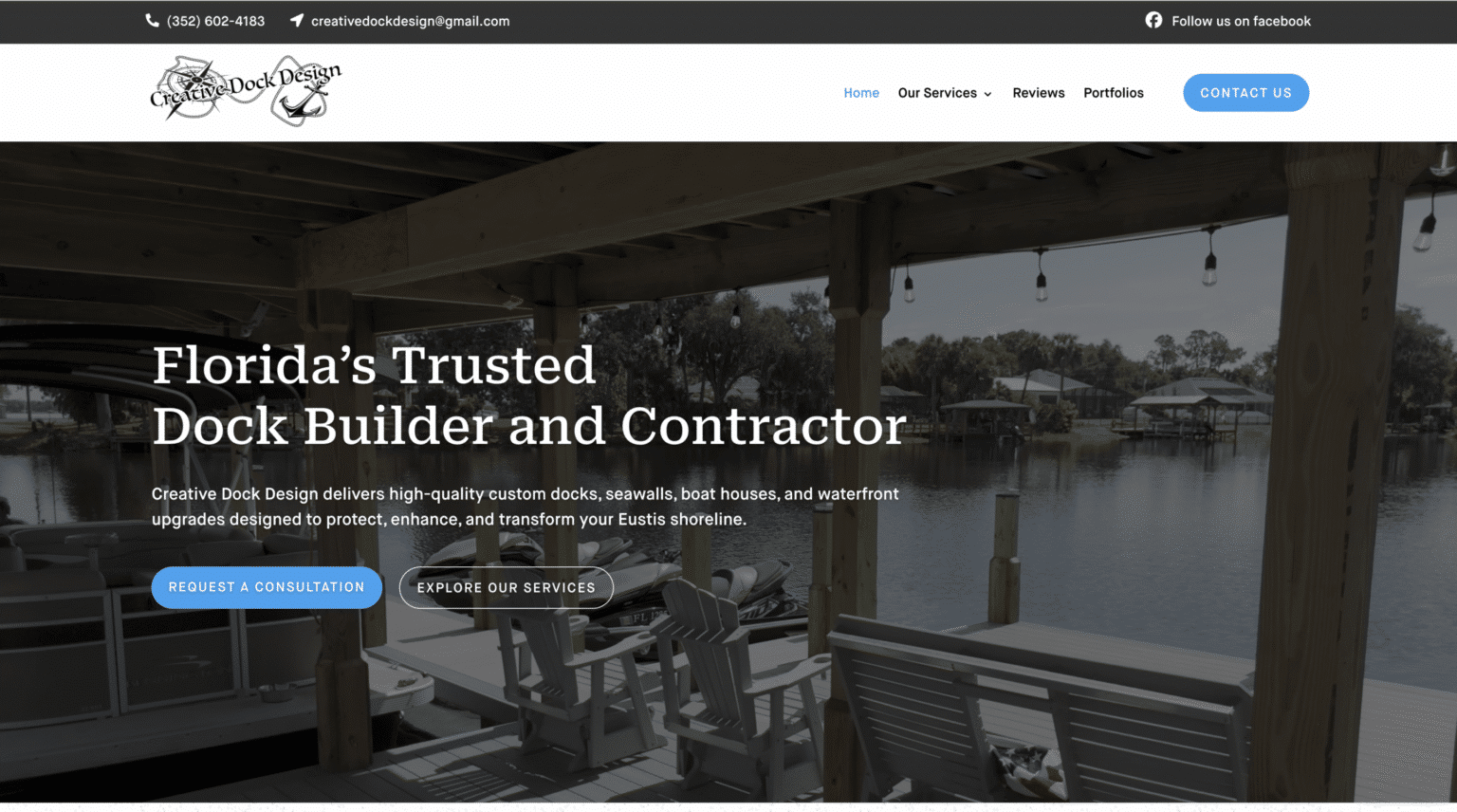
For many flooring companies, this is the sweet spot. You are not asking for complex development. You are asking for a clean website that does not look amateur, works on mobile, and gives customers confidence. A good web designer for contractors can often do that without the overhead of an agency.
Still, freelancers vary widely. Some are excellent designers but weak on messaging. Some launch quickly but disappear when you need revisions two months later. Some do solid setup work but leave hosting, security, backups, and updates entirely on your plate.
That does not make freelancers a bad choice. It just means the price alone tells you very little. Ask what happens after launch. If you need text edits, page additions, photo swaps, or support, is that included, billed hourly, or simply unavailable? For a small flooring brand, that answer matters almost as much as the homepage mockup.
When an agency earns the higher price
Agencies are not automatically better. They are just built for bigger needs.
If your flooring business has multiple crews, several locations, more complex marketing goals, or a larger lead-generation plan, an agency may be the right fit. Agencies are often a better choice when the work goes beyond design into strategy, development, and broader campaign support.
That said, many small contractors overbuy here. They hire an agency when all they needed was a tight five-page site, a sharper contact flow, and someone reliable to keep things updated. If your requirements are straightforward, agency pricing may not return enough value to justify it.
This is where some owners end up paying for the idea of sophistication rather than measurable usefulness. A site can be expensive and still bad at getting calls.
Why managed websites appeal to busy owners
There is a reason managed websites have become attractive to local service businesses. They remove technical chores that most owners neither enjoy nor reliably remember.
Managed hosting and managed website arrangements commonly bundle the work that gets ignored until something breaks: hosting, security, backups, updates, and support. For the right contractor, that is not a luxury. It is operational relief.
This is especially relevant if you have already lived through a broken form, a hacked site, a homepage outage, or that annoying moment when your site displays badly on mobile and no one knows why. Business owners often underestimate how much friction those issues create until leads are lost.
A managed website for small business can be a strong fit when the owner wants predictable monthly costs and a clear support structure. One example is Scalable Websites, a Houston, TX-based managed website provider for contractors nationwide, offering professionally designed websites on a monthly subscription with hosting, security, unlimited updates, a dedicated project manager, and launches in days.
Whether that specific model fits you depends on your budget and preferences, but the larger point stands: convenience has value, especially when your website is supposed to support sales, not become another maintenance task.
Flooring companies have different needs than generic contractors
A generic contractor template rarely does justice to a flooring business. Flooring is highly visual, but customers also have practical concerns that differ from other trades. They want to know what materials you work with, whether you install or refinish, what spaces you serve, and how to start the estimate process.
That is why flooring contractor website design deserves its own attention. A flooring site should not feel like a watered-down remodeling site with a few stock floor photos dropped in. It should speak directly to the https://serviceswebsiteguide196.terracolumn.com/posts/contractor-website-that-generates-leads-why-publicly-accessible-pages-and-clear-local-signals-matter buying process for your category.
Take epoxy, for example. Epoxy flooring website design often needs to do more visual persuasion because finish quality and appearance are central to the sale. Concrete coating website design may need to help the customer understand the use case and result. Home remodeling website design usually has a wider scope and more service complexity. The structure can overlap, but the messaging should not be identical.
The same principle applies to niche home service brands. Pool screen enclosure website design, dock builder website design, and mold remediation website design all sit under the broad contractor umbrella, yet each one asks the customer to trust a different kind of expertise. Good websites reflect that difference in tone, photos, and page content.
Signs you need a contractor website redesign
Some owners keep an underperforming site too long because it is technically still online. That is not the right standard. A site should be judged by whether it helps customers complete the actions you value.
A contractor website redesign becomes necessary when the site creates doubt, confusion, or friction. Watch for these signals:
- Your site looks poor or awkward on mobile, especially on the homepage or contact page.
- Contact information is hard to find or not consistently visible.
- Key content is outdated, including services, pricing references, promotions, or service areas.
- Customers struggle to navigate, or your most important pages are buried.
- The site looks old enough that it quietly undermines trust.
Those are not cosmetic complaints. They affect conversion. Google’s framing is useful here: think like the customer, and define success by whether the site helps people complete the action you want. If your quote form is hidden, your phone number is buried, or your service pages are vague, the problem is functional before it is aesthetic.
What to spend on first if money is tight
When budget is limited, spending priorities matter more than platform debates.
First, make sure the site is mobile-friendly and current. That is the baseline for trust and usability. Second, tighten the pages customers actually use, usually the homepage, service pages, and contact page. Third, improve clarity before design flourishes. Better headlines, stronger service descriptions, and simpler navigation often do more than expensive visual effects.
One owner I spoke with years ago had spent money on a homepage video but had no clear estimate form and no visible service-area information. He was proud of the video. Customers, meanwhile, were bouncing because they could not quickly tell whether he worked in their city. That is a classic small-business mistake. Attractive confusion is still confusion.
If funds allow only one professional upgrade, I would usually put it into stronger structure and messaging rather than flashy design. A clean layout with the right information beats a beautiful site that hides the ball.
How to choose without overthinking it
The right choice usually becomes clearer when you answer a few plain questions about your business, not about websites in general.
If you need the lowest upfront cost and can handle content edits yourself, DIY is reasonable. If you want a more polished site and can manage a project with one person, a freelancer is often the next step. If your needs are broader or more custom, an agency may be justified. If you want less hassle after launch and value bundled support, a managed model deserves serious attention.
This is less about finding the perfect platform and more about matching the website model to your operating reality. The best website builder for contractors is not automatically the best option for your flooring company if you do not have time to maintain it. The best web designer for contractors is not a great fit if they vanish after launch. The cheapest route is not the cheapest if the site stays outdated and costs you leads.
The persuasive case for practical spending
Small home service brands often think they need to choose between cheap and professional. That is the wrong frame. The better choice is between waste and usefulness.
A useful website does not have to be expensive, but it does have to be current, mobile-friendly, easy to navigate, and built around customer action. That is true whether you are reviewing flooring contractor website design or comparing adjacent categories like home remodeling website design and concrete coating website design.
What wins in the field is not abstract creativity. It is confidence. The customer has to feel that your business is legitimate, your work is relevant to their project, and contacting you will be easy. If your website creates that confidence, it is doing real work for your company.
So if you are weighing a contractor website redesign or starting fresh on a tight budget, be ruthless about priorities. Buy clarity. Buy ease of use. Buy support if you know you will need it. Skip vanity features that look expensive but do little to help customers take the next step.
That is how small flooring brands stay lean without looking cheap.
Ends · TRADESPLAYBOOK752